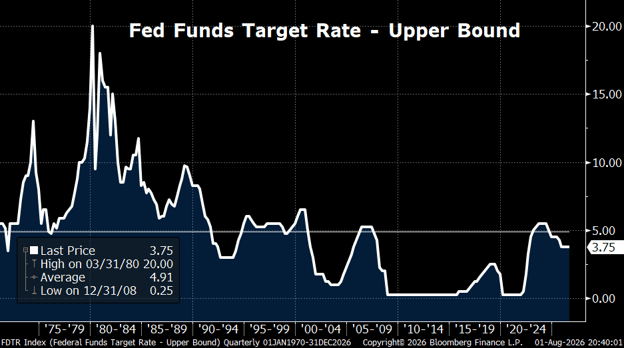
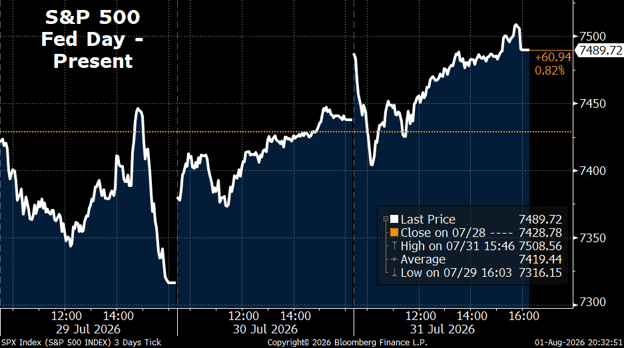
An early selloff on Wednesday heading into the decision on interest rates gave way to a sharp (bit short-lived) rebound that day after Kevin Warsh & Co. left the target for the Fed Funds rate unchanged at a range of 3.50% to 3.75%,…
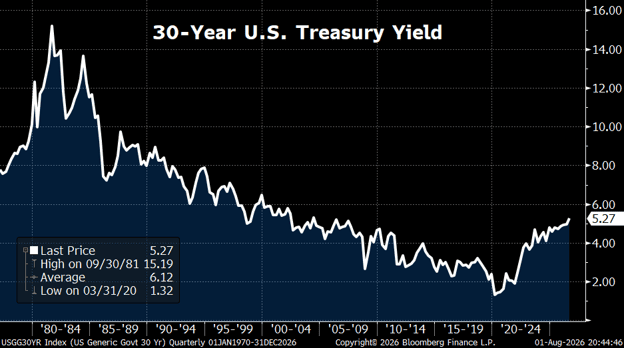
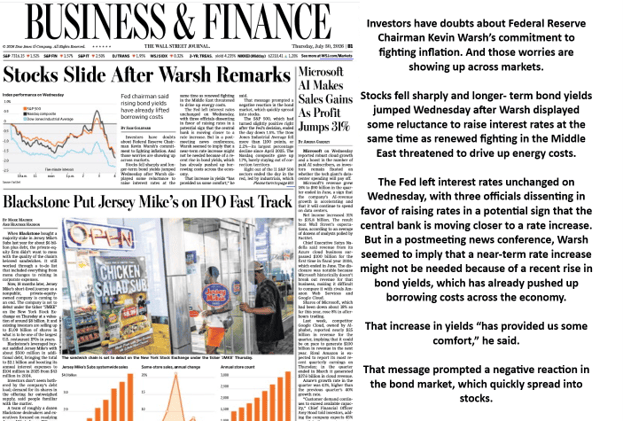
…which prompted one pundit to exclaim, “The Fed offered some near-term relief to equites and fixed income in its decision today,” as the S&P 500 reversed course to move into the green on the day, just in time for a plunge in long-term bond prices that sent the yield on the 30-Year U.S. Treasury soaring to the highest level in 19 years,…
…and a skid in equity prices, evidently because Mr. Warsh is “strong on inflation in word, but isn’t following through in deed,” according to another market watcher.
Further adding to the confusion in explaining short-term market moves, The New York Times proclaimed in Friday’s edition, “Financial markets swiftly rejected Mr. Warsh’s approach, which involved tough talk on inflation but stopped well short of embracing the prospects of higher interest rates to quell price pressures.” Never mind that there was a massive rally in stocks on Thursday that carried over into Friday’s trading and pushed the S&P 500 higher, yes higher, for the full three-day post-Fed-Decision period.
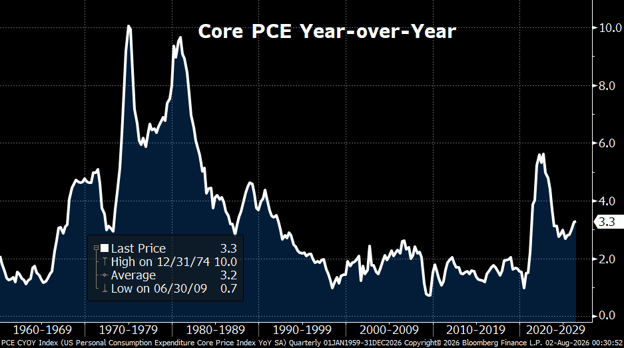
No doubt, the jury is out on Mr. Warsh’s chairmanship and historians will offer the reminder that new Fed Chairs often are tested early on by the financial markets, but the central bank’s preferred measure of inflation, the Core Personal Consumption Expenditures (PCE) Index, was released the day after the Fed meeting. The gauge rose by 3.3% on a year-over-year basis in June, down from a 3.4% increase in May, and not too far off the long-term average,…
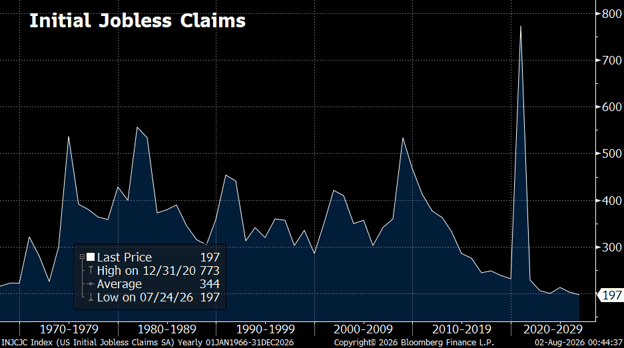
… so one could argue the decision to leave interest rates unchanged at this meeting was the correct one, especially given that real (inflation-adjusted) U.S. GDP growth in Q2 came in weaker-than-expected at 1.5%, though the labor market remains robust as the latest report on weekly first-time filings for unemployment benefits was about as low as it has ever been.
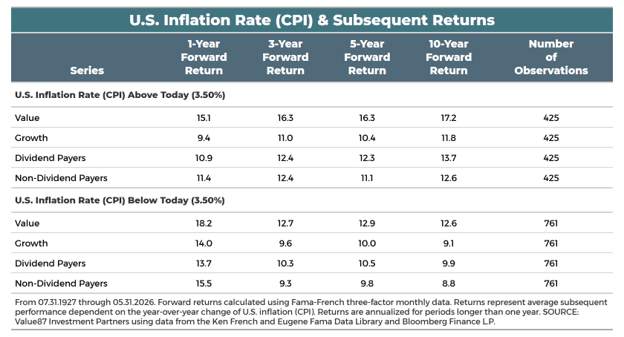
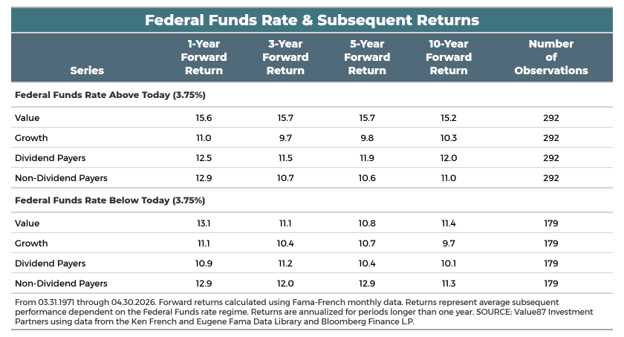
No doubt, the markets will continue to gyrate based on speculation about what the Fed might do, but we offer the reminder that stocks, ON AVERAGE, have performed fine whether inflation is higher or lower than today’s 3.5% reading on the consumer price index,…
…or whether the Fed Funds rate is above or below today’s level,…
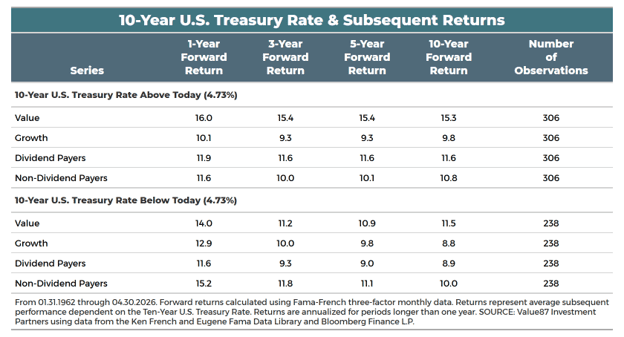
…or whether the benchmark 10-Year U.S. Treasury yield is above or below the current yield of 4.73%, while actually is on the lower end by historical standards dating back to 1962.
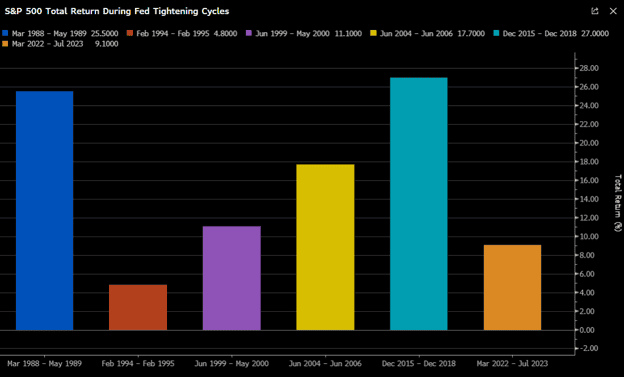
And for those fretting that Mr. Warsh & Co. may soon hike interest rates, we asked Bloomberg AI to build a chart showing the S&P 500’s return during the prior 6 monetary policy tightening cycles,...
…and just for kicks, the returns of that index during the previous 6 easing cycles,…
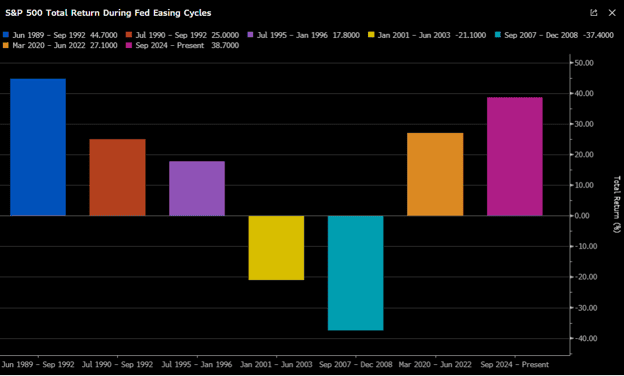
…to further illustrate that the long-term evidence does not add much credence to those who argue, “Don’t Fight the Fed,” if America’s central bank is raising (or lowering) interest rates.
As always, we offer our usual caveat that selloffs, downturns, corrections and even Bear Markets are part of the investment process,…
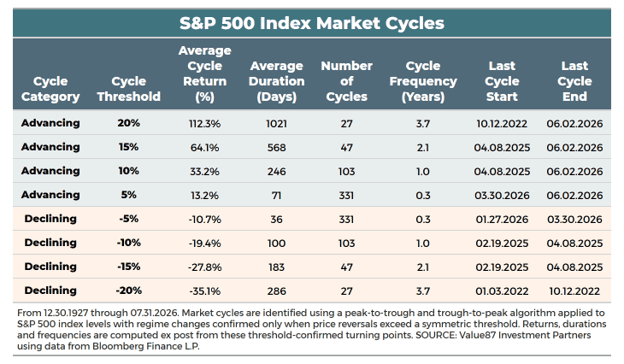
…but the secret to success in stocks is not to get scared out of them, given the superb long-term return numbers.
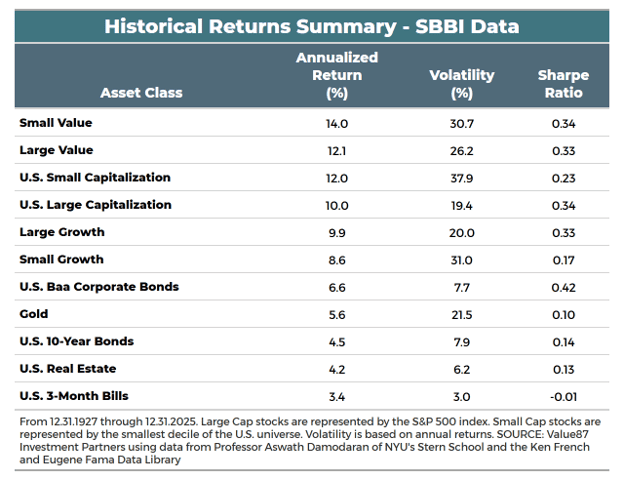
To be sure, keeping calm in the face of market volatility is easier said than done, and it pays to heed the advice of legendary investor Warren Buffet, who said, “Look at market fluctuations as your friend rather than your enemy; profit from folly rather than participate in it.” Indeed, last week we saw another of the Oracle of Omaha’s admonitions play out, “Only when the tide goes out do you discover who’s been swimming naked,” with the fire sale of AI stocks by Situational Awareness, the once-$40 billion hedge fund run by 24-year-old investing-novice Leopold Aschenbrenner.
Much ink has been spilled on the credentials of the supposed Nostradamus of AI, and it is said that he has still made a fortune for his early investors, despite losing 67% very quickly, so there will be no stones thrown in our glass house. Still, Mr. Aschenbrenner was said to use 400% leverage as he aimed to get rich quick, but our “situational awareness” to gains on our AI stocks has been different.
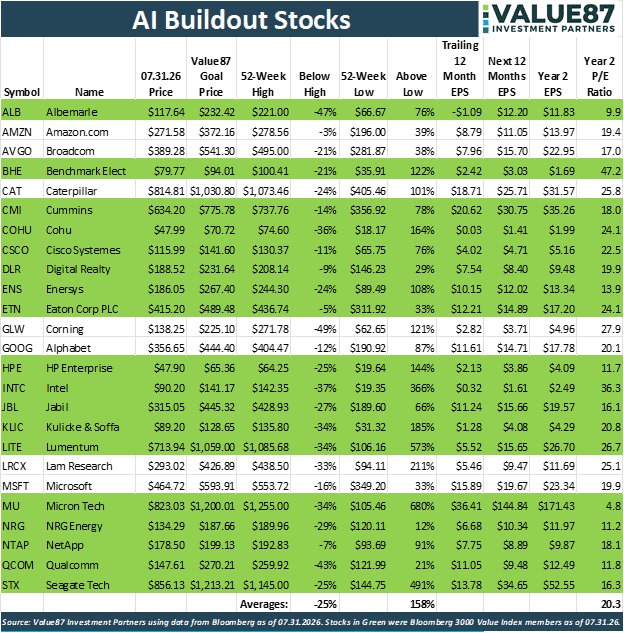
We have gradually taken some of our chips off the table as we have sought to manage downside risk in a tech space long characterized as highly volatile, while also retaining a chunk of our holdings for their long-term appreciation potential, given the multi-year AI growth cycle. Getting the timing right is the challenge, but the 25% average drop from the 52-week high for the 25 stocks in the table above…and the 158% average gain from the 52-week low…suggests to us that our middle way is a reasonable tact to take.
After all, the Tortoise beat the Hare in the famous Aesop fable, while we think a recent column by investment newsletter watchdog Mark Hulbert is a valuable read when it comes to investor return expectations: Click here to read.