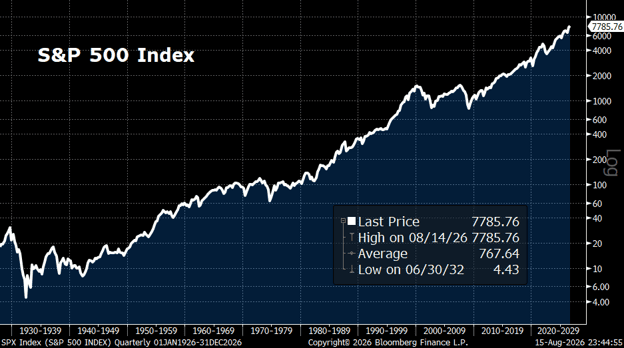
It is easy to say that equities have been the place to be for long-term-oriented investors when the major market averages are trading at or just below all-time highs,…
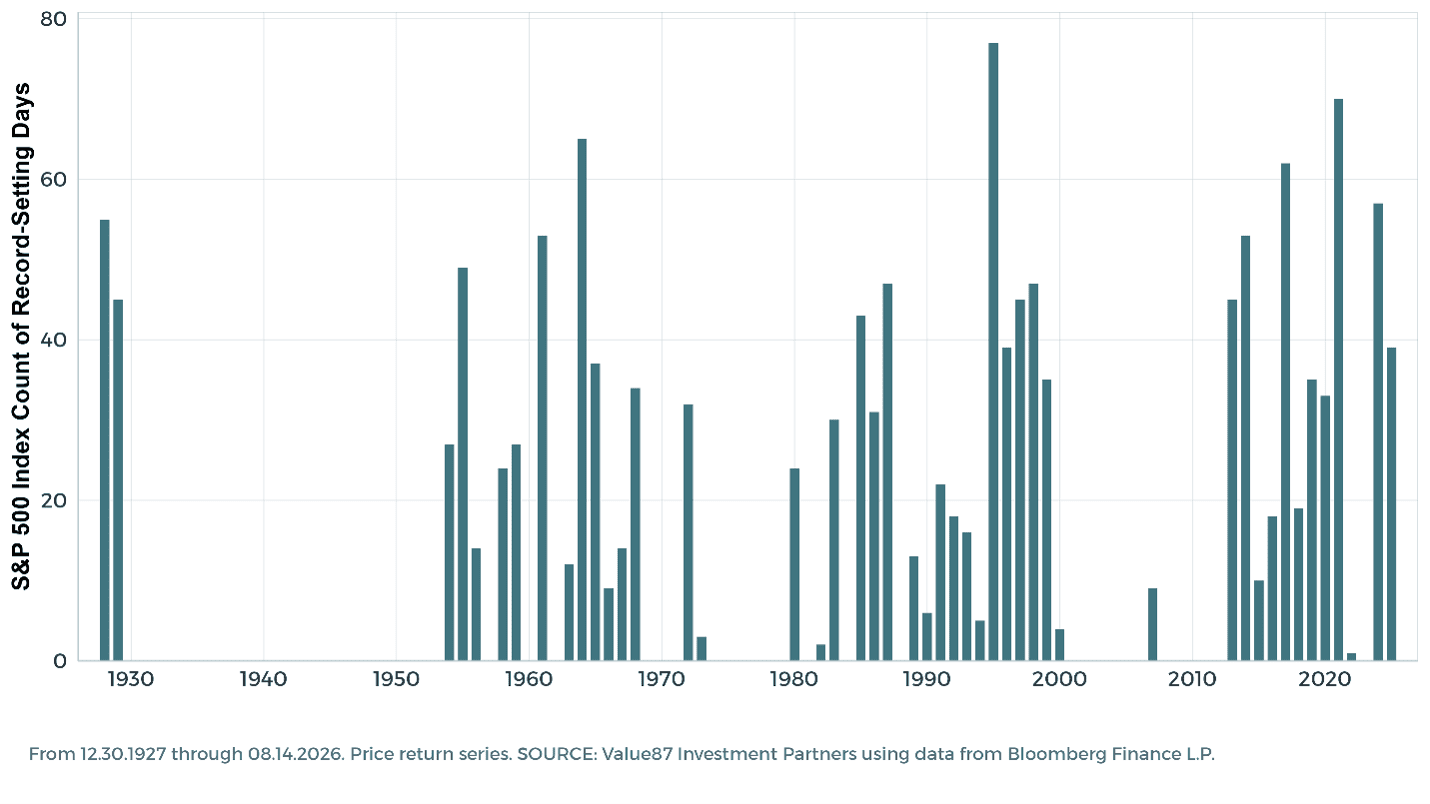
…especially as history shows that record-setting days are not that rare an occurrence…,
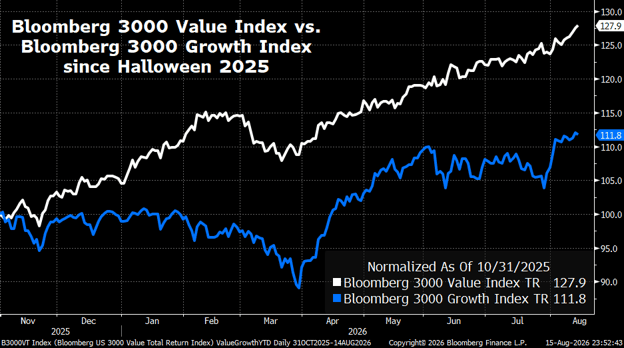
…and the week just ended saw the proverbial soldiers outperform the generals with the S&P 500 Equal Weight index advancing 1.2%, versus a gain of 0.4% for the capitalization-weighted S&P, while Value stocks expanded on their outperformance advantage since Halloween.
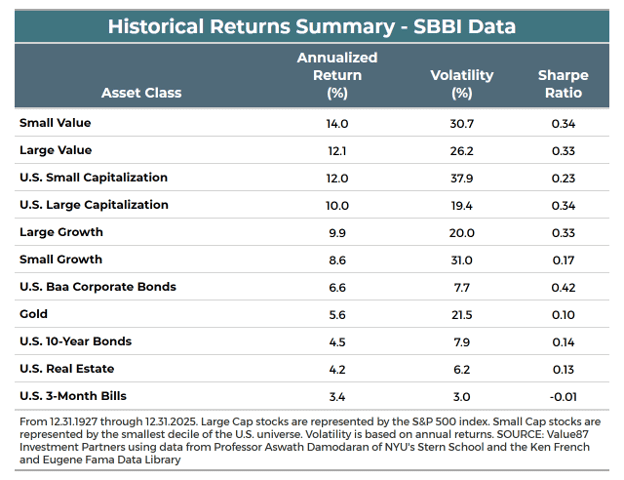
While one might think the terrific rally this year…and last year…and in 2024…and in 2023…, not to mention the handsome returns over the last century,…
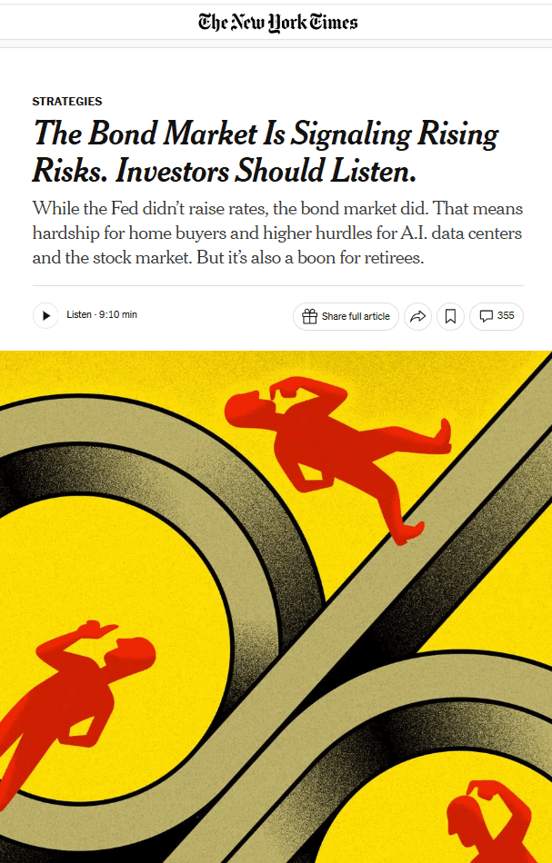
…would compel the financial press to sing the praises of stocks, negative stories seemingly continue to grab the most eyeballs, with one prominent columnist recently warning about the dangers of higher interest rates,…
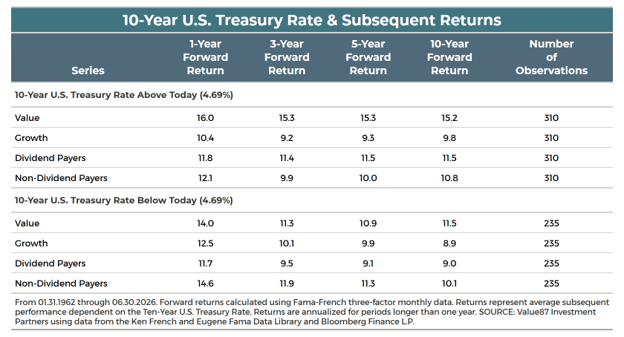
…even as the historical evidence shows little correlation, ON AVERAGE, between Treasury yields and equity returns.
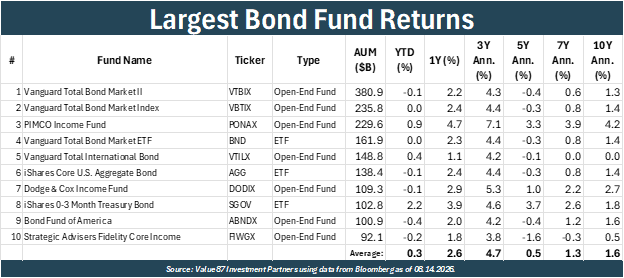
Indeed, about the only thing that can be said about rising interest rates is that they are bad for bond prices, as a look at returns on long-term U.S. Treasuries and some of the biggest Fixed Income funds over the last 5 years will attest.
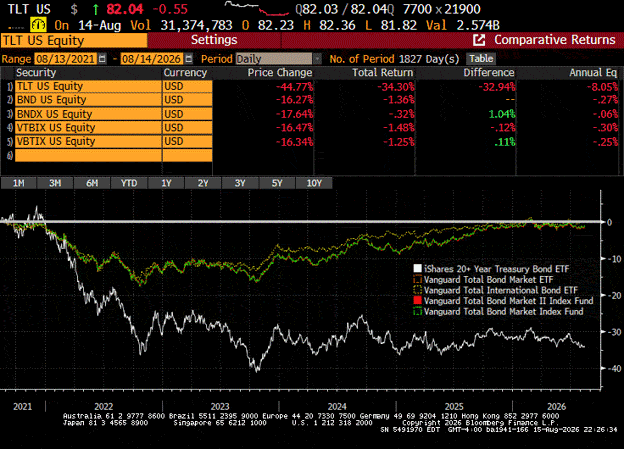
Certainly, we think there is a place for Fixed Income in most asset allocations, but we generally favor Treasury- or Corporate-Bond ladders, with those instruments held to maturity, versus constant-maturity funds, like the 10 largest in terms of assets under management via a Bloomberg search presented in the table below, that can lose money for their holders over long time spans,…
…while we don’t recall too many market watchers warning folks of the folly of investing in negative yielding government debt a decade ago and during the Pandemic, with a whopping $17.8 trillion (with a “T”) of such instruments outstanding in December 2020.
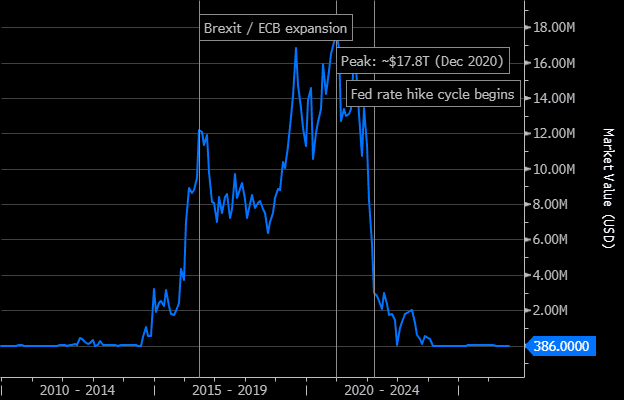
Of course, as we have joked in the past, if a negative yield debt buyer was hoping to lose 40 basis points on their investment and they ended up losing 400 basis points, they should be thrilled with a 10X return since math says that the minus signs cancel each other out!
The sad part of all the pessimism that constantly surrounds stocks is that so many folks forget the advice of legendary investor Charlie Munger who said, “The first rule of compounding: Never interrupt it unnecessarily.”
This is especially true when one considers that it doesn’t take a massive annualized return tally to compound wealth over the long-term. Indeed, the latest sale valuation announced last week of the Los Angeles Lakers basketball team for $12.5 billion provides a vivid illustration.
The late-Jerry Buss bought the NBA franchise in 1979 for $67.5 million, and his family still owns a minority stake on which they have a 186-fold gain. Sounds like a fantastic investment to turn something worth $67.5 million into $12.5 billion, but the 47-year holding period sees that impressive appreciation work out to “only” 11.8% per annum, excluding any income or distributions, or additional monies that may have been added to run the franchise.
Alas, the challenge in trying to time moves into and out of stocks is missing advances like what has been seen over the last 12 months,…
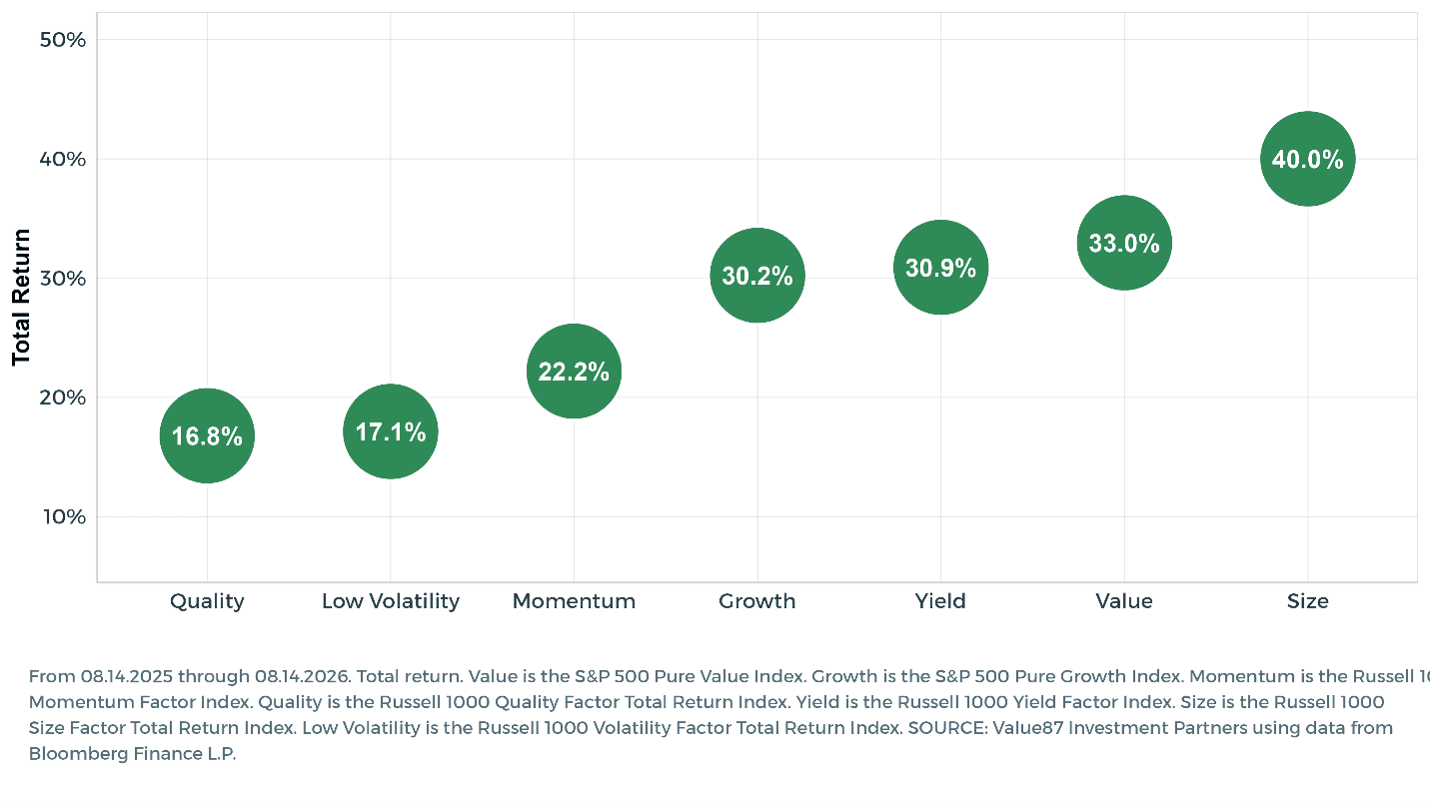
…even as there is never any assurance that stocks will prove rewarding and there are always trips south along the way,…
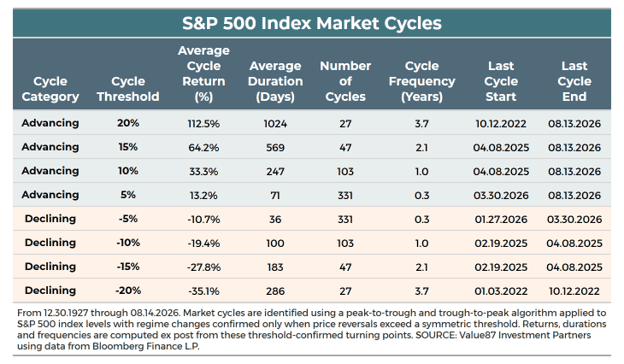
…including sizable drops each and every year,…
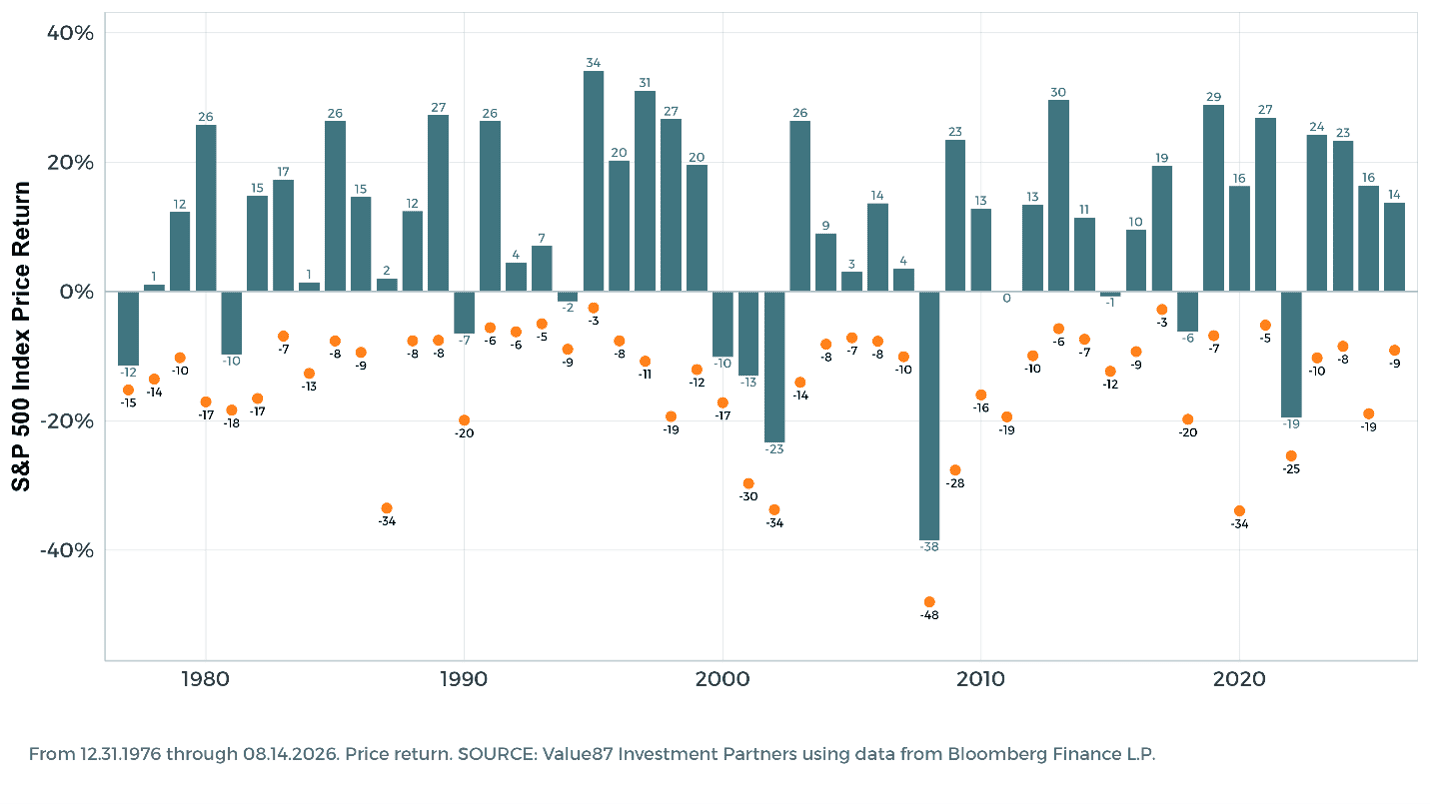
…but equities thus far have overcome every disconcerting headline,…
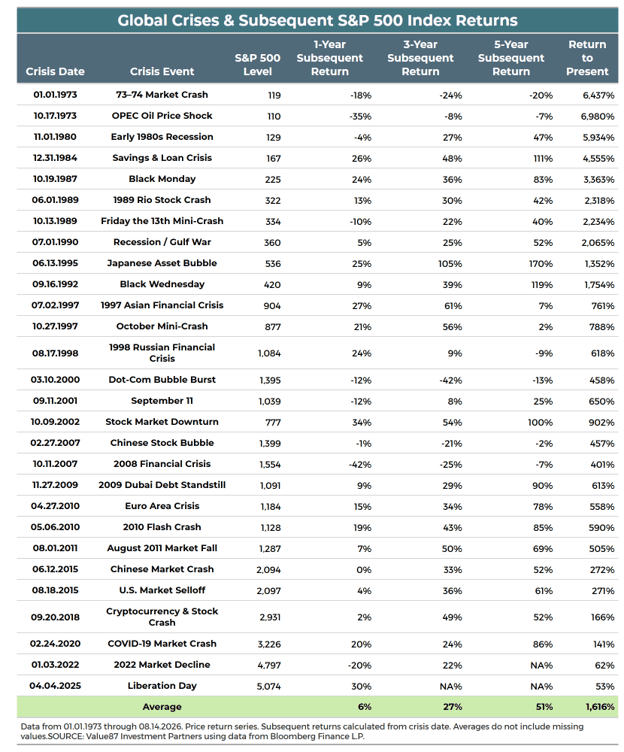
…while the siren songs that might cause sailors to steer off course can be confronted by simple data crunching. After all, consider subsequent equity-return numbers, ON AVERAGE, using last week’s important inflation readings, both the 2.5% increase in the Core Consumer Price Index,…
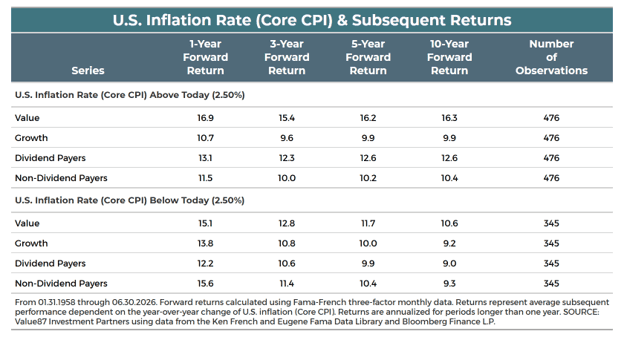
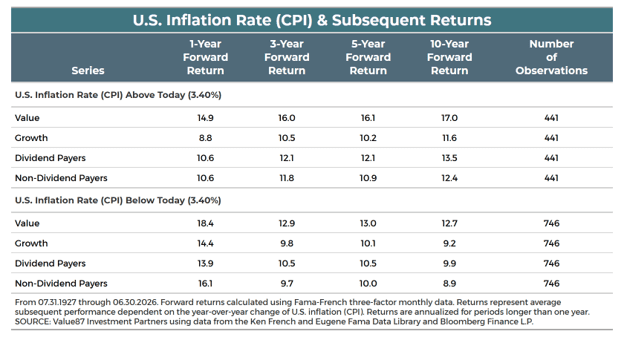
…and the 3.4% jump in the overall CPI, which hopefully should provide some valuable perspective.
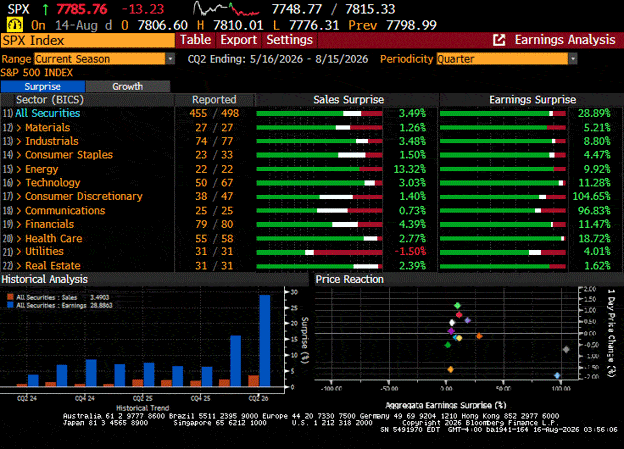
Anything can happen as we move forward and we are always braced for downside volatility, but it is hard not to be enthused about stocks, given the stellar Q2 earnings reporting season just reported, where a whopping 87.2% of the S&P 500 beat bottom-line expectations and 68% exceeded top-line forecasts.
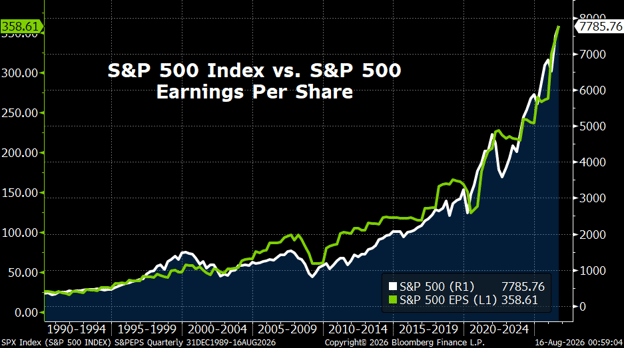
This is especially true as stock prices have moved higher over time as corporate profits have risen, and the current consensus estimates from Bloomberg for the S&P 500 call for EPS to grow from $241.66 in 2025 to $338.10 this year and $385.88 in 2027, with the next-12-month figure presently standing at $358.61.
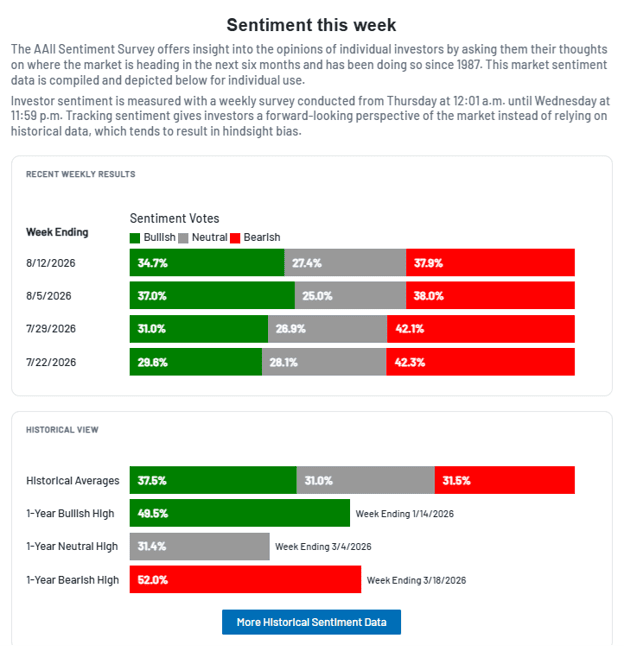
And for those who think there is somehow too much optimism for stocks, despite the preponderance of pessimism in the press, we counter with the latest Bearish read on weekly Main Street investor sentiment.