
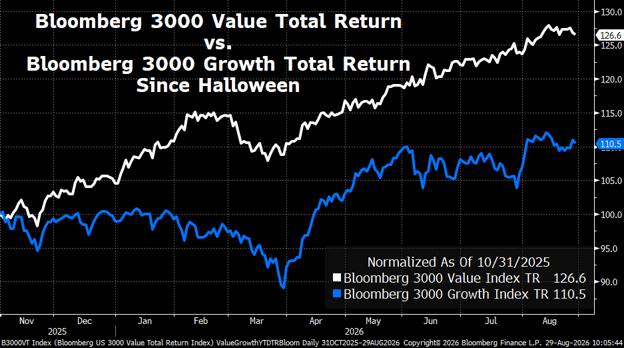
We may be past the “official” dog days of summer on the calendar, but it was a blah week for the equity markets with the average stock retreating modestly and Growth cutting into Value’s lead in the performance race since last Halloween.
And with many traders seemingly still in the Hamptons and not a lot going on when it comes to corporate developments as Q2 Earnings Reporting season is winding down, the financial press devoted ink last week to “big picture” stories.
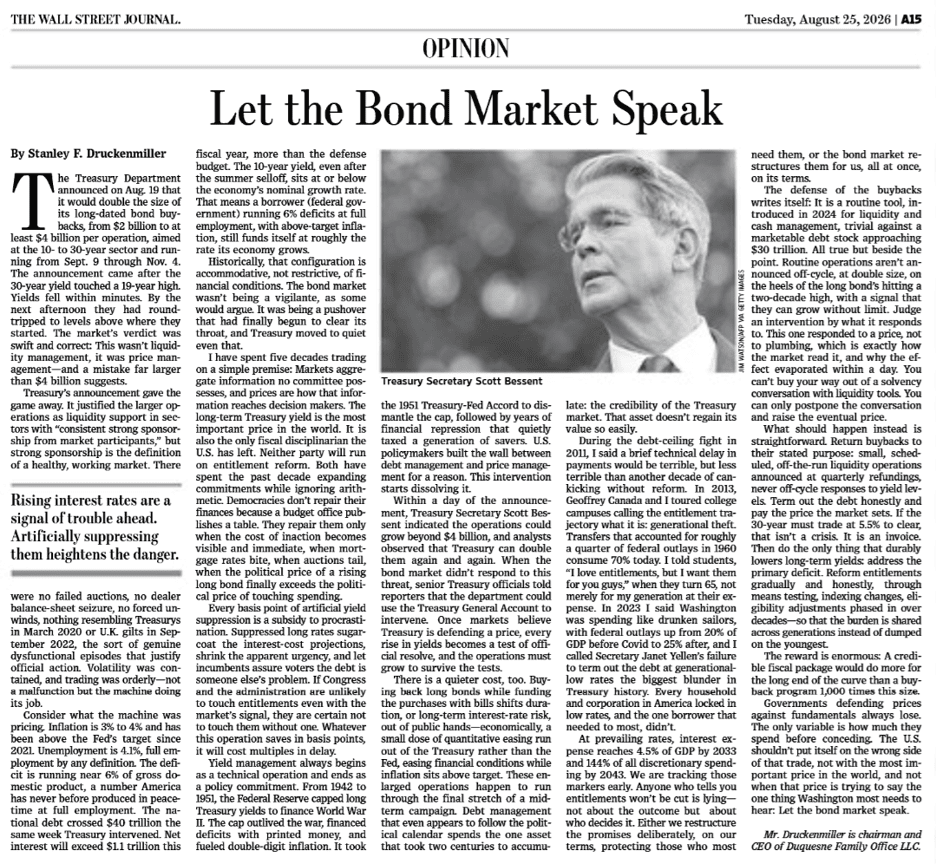
Interestingly, the publication of one of those features on Tuesday, in the Opinion section of The Wall Street Journal no less, attracted plenty of attention. True, when a billionaire investor speaks, many take notice, and we generally agree with preferring the “free market” stance that was offered by Stanley Druckenmiller when it comes to bond market machinations, but it was fascinating that the piece shown above seemingly derived significant interest because the author was assisted in the writing by AI.
When queried, Mr. Druckenmiller was quick to disclose that he used a large language model. He added that he viewed it as a tool, much like a calculator to do math, and he isn’t a professional writer. Nevertheless, the WSJ saw fit to print those comments in a defense of their vetting practices, devoting more ink in the Opinion section on Thursday.
Editorial Page editor Paul A. Gigot, in a piece called Much Ado About Artificial Intelligence, concluded:
I realize this episode will encourage some writers to think they can send in AI slop. I hope we’ll detect and reject it, as my editors have in the past. But it wouldn’t be honest for me to grandstand that our contributors never use a tool like AI. Mr. Druckenmiller’s sin against the media pharisees was admitting its use. But his contribution to the public debate was still valuable, and he’s welcome in our pages any time.
Nothing wrong with letting AI do some of the leg work, in our view, and we make use of the technology to aid us in summarizing earnings releases for our review and to ensure we aren’t missing something from the Bull and Bear cases for the stocks we own or are researching. But we strive to include factually correct information in anything that we put our names on.
Sadly, both Mr. Druckenmiller and the WSJ each erred in this regard in Tuesday’s article. Yes, some may deem it sacrilege to challenge an esteemed investor as well as the preeminent financial daily, while others may argue it could be a publication-timing issue or the statement is true in some instances, but nothing draws our ire more than opinions proffered as the gospel.
Our beef with Druckenmiller’s Let the Bond Market Speak was in the opening paragraph…
The Treasury Department announced on Aug. 19 that it would double the size of its long-dated bond buybacks, from $2 billion to at least $4 billion per operation, aimed at the 10- to 30-year sector and running from Sept. 9 through Nov. 4. The announcement came after the 30-year yield touched a 19-year high. Yields fell within minutes. By the next afternoon they had roundtripped to levels above where they started. The market’s verdict was swift and correct: This wasn’t liquidity management, it was price management— and a mistake far larger than $4 billion suggests.
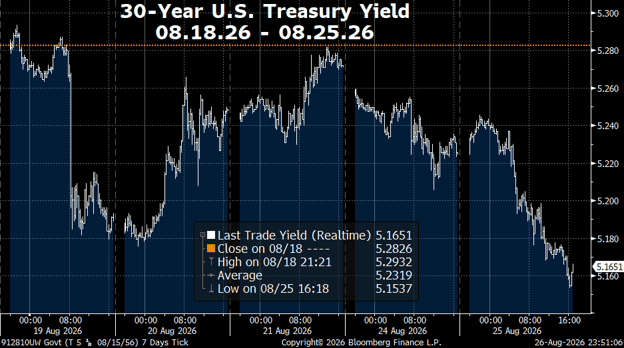
Given that the yield on the 30-Year Treasury dropped from 5.28% the day prior to the Fed buyback announcement to 5.17% a week later, we aren’t sure why a two-day response is the definitive time period for determining the verdict of the market, especially as there are so many factors that can move a market as large as U.S. government debt.
Indeed, bond prices are influenced by many inputs, with Treasury yields in the days since AI wrote Mr. Druckenmiller’s opinion piece reacting to economic data, including a mostly in-line report on PCE inflation, an escalation of the tariff skirmish with Canada, new developments in the Middle East, gyrations in the currency markets and new Fed Chair Kevin Warsh’s Jackson Hole speech.
The bottom line is that it will be years before we could even begin to contemplate whether a single event had a positive or negative impact on asset prices over the long term, but if we had to draw a conclusion today based solely on short-term market reaction since the Treasury buyback news, it would be precisely the opposite of Mr. Druckenmiller’s AI large language model.
Perhaps if the author gave AI another crack on Friday, it might have rewritten the opening paragraph as follows:
The Treasury Department announced on Aug. 19 that it would double the size of its long-dated bond buybacks, from $2 billion to at least $4 billion per operation, aimed at the 10- to 30-year sector and running from Sept. 9 through Nov. 4. The announcement came after the 30-year yield touched a 19-year high. Yields fell within minutes. By the next afternoon they had roundtripped to levels above where they started only to move lower in the ensuing days. The market’s verdict was swift and correct: This liquidity management had the effect of managing price and evidently it was a success far larger than $4 billion suggests.
To be sure, it will draw more eyeballs if one sounds highly convicted in one’s assertions, but none of us can predict the future nor do we know for sure how the prices of bonds, stocks, commodities, etc. will react even if we knew tomorrow’s headlines today. The honest answer should be, “I don’t know for sure, but I think A, B and C impacted trading decisions,” when a question about short-term market movements is asked, but our larger beef with the Druckenmiller piece was not anything he or his chatbot wrote.
Instead, it was what the WSJ editors decided to use as a call out: Rising interest rates are a sign of trouble ahead.
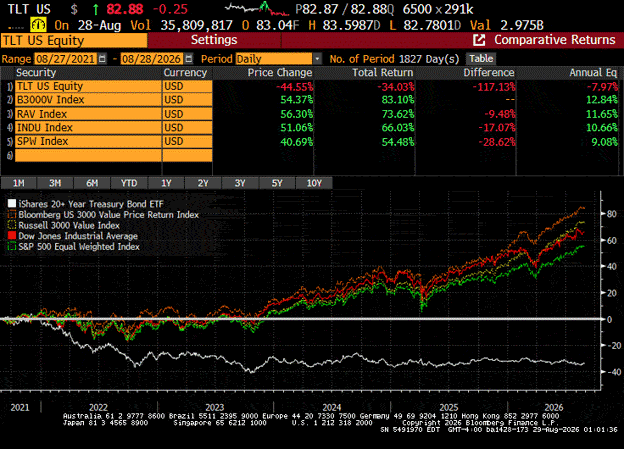
That is a real head-scratcher…unless they were talking about trouble for bond holders, given that the yield on the 30-Year Treasury rose over the past five years from less than 2% to more than 5%,…
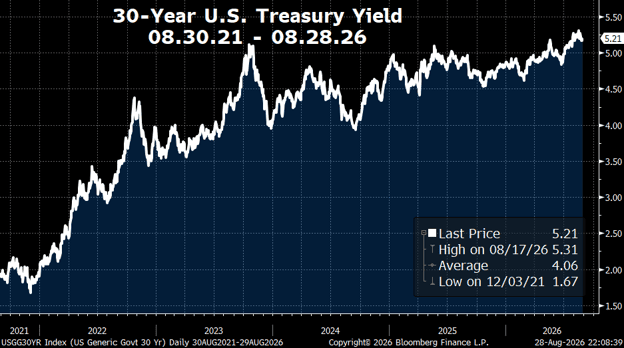
…resulting in massive losses for holders of a long-term Treasury ETF (ticker symbol TLT)…while there were big gains for equity prices.
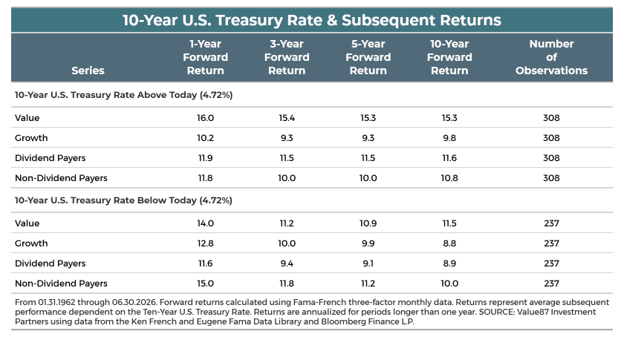
Anything can happen and, all else equal, higher interest rates should make other investments less appealing, but all else is never equal. Further, as we have written in recent weeks, the historical evidence shows little correlation between Treasury yields and equity returns,...
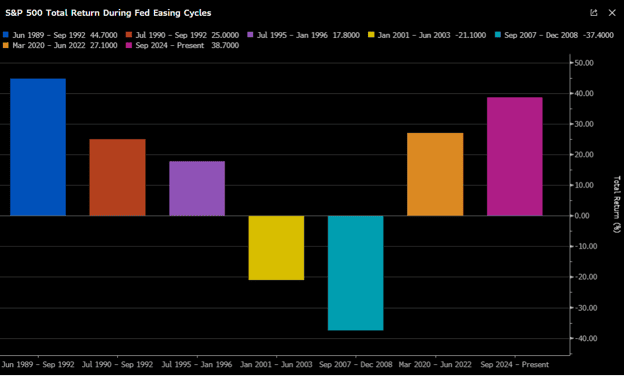
…while Bloomberg AI recently built charts for us showing the S&P 500’s return during the prior 6 monetary policy easing cycles,...
…and the returns of that index during the previous 6 tightening cycles, with little that can be gleaned in our view about equities when these future events might occur.
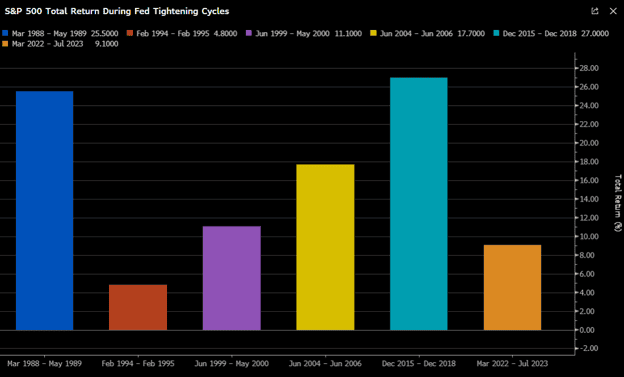
Of course, the S&P 500 gained ground in each of the 6 periods of the latter chart, so maybe we should be pleased that the betting odds presently suggest a higher Fed Funds rate is likely in the near term,…
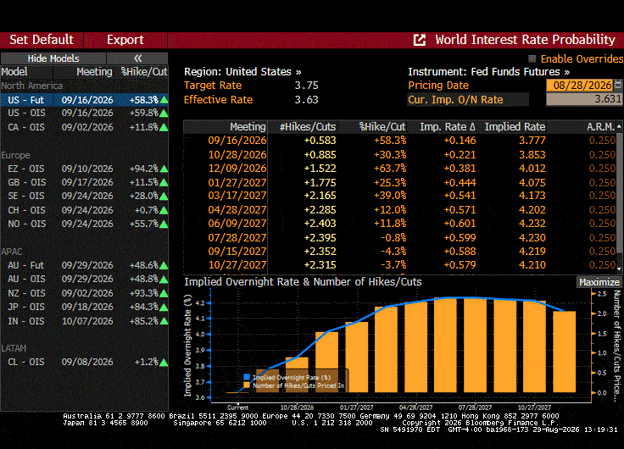
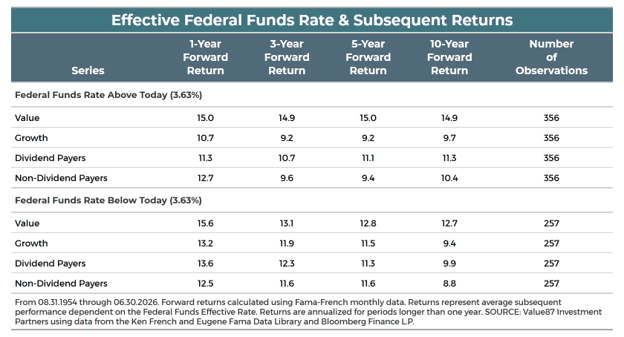
…though the long-term analytics also do not show much difference in returns when considering whether the U.S. central bank’s lending rate is higher or lower than today’s 3.63% effective rate,…
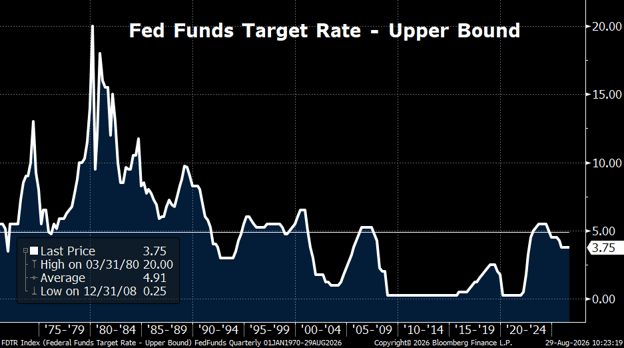
…and even if there a couple of hikes in the cards, the rate would still be below the long-term average.
Many will say that the recent jump in interest rates is due to investor indigestion about the U.S. national debt hitting the $40 trillion mark and we can’t argue that this isn’t something about which to be concerned.
Of course, it was a worry when it hit $1 trillion during the Reagan Administration on October 22, 1981, and $5 trillion during the Clinton Administration on February 23, 1996, and $10 trillion during the Bush (W) Administration on September 30, 2008, and $20 trillion during the Trump (45) Administration on September 8, 2017, and $30 trillion during the Biden Administration on January 31, 2022.
Not to sound cavalier, but it wouldn’t have been so grand to have bailed on stocks in 1981 (the Dow Jones Industrial Average was then in the 800 range) due to deficit worries,…
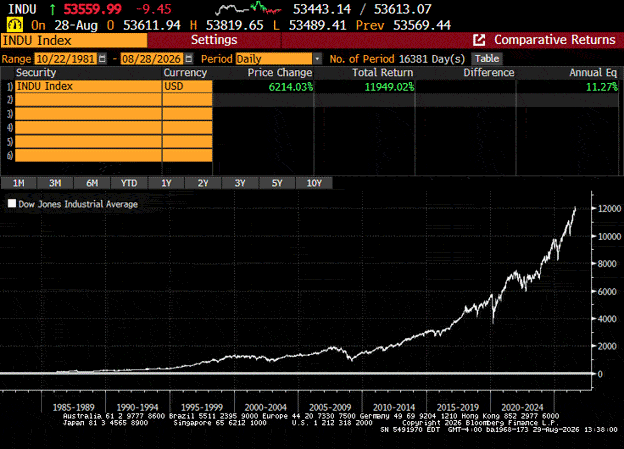
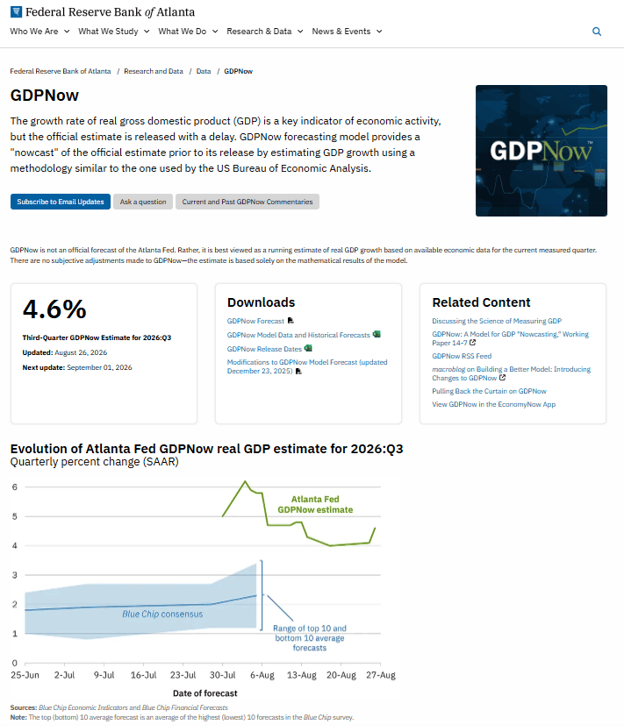
…especially as the U.S. economy and corporate profits, the ultimate drivers of stock prices, have continued to grow over the last 45 years, with the latest estimate for U.S. GDP growth in Q3 from the Atlanta Fed standing at a robust 4.6%,…
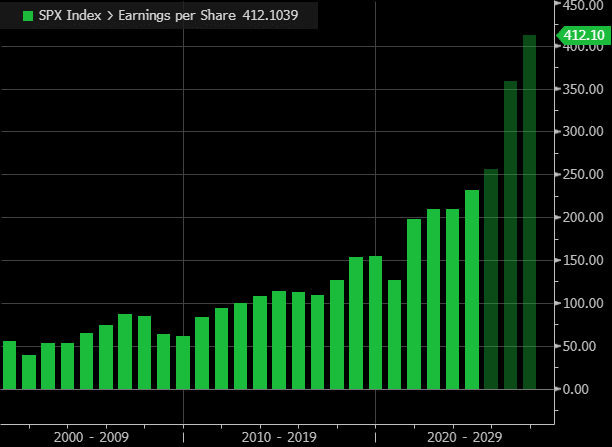
…while the outlook for corporate profit increases remains very healthy at present.
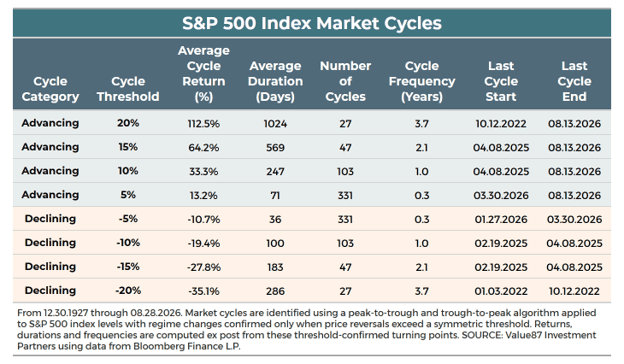
Yes, we must always be braced for downside in stocks, as 5% selloffs, 10% corrections and even 20% Bear Markets are part of the process,…
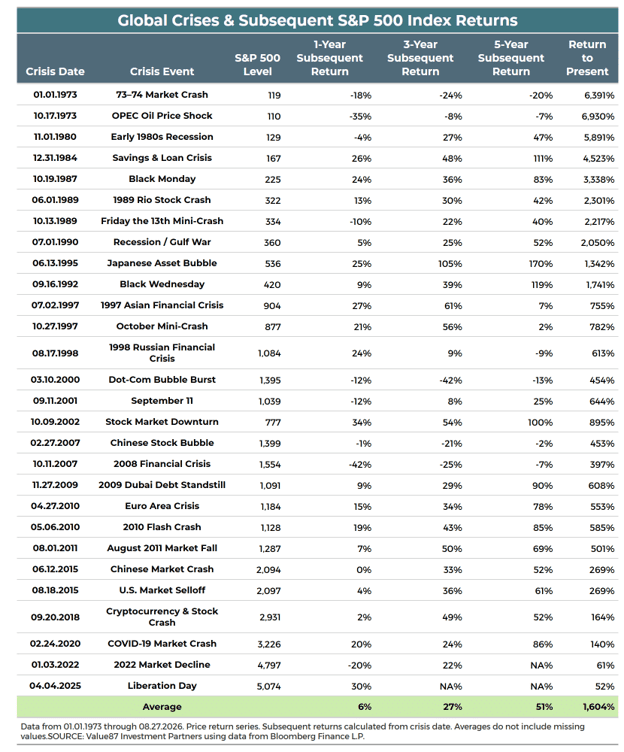
…but there is always potential trouble ahead!
No doubt, negative headlines grab far more eyeballs than positive, and the financial press is in the business of attracting page views, so we weren’t surprised by another WSJ feature last week that emphasized all the money that has been lost recently in the Korean stock market,…
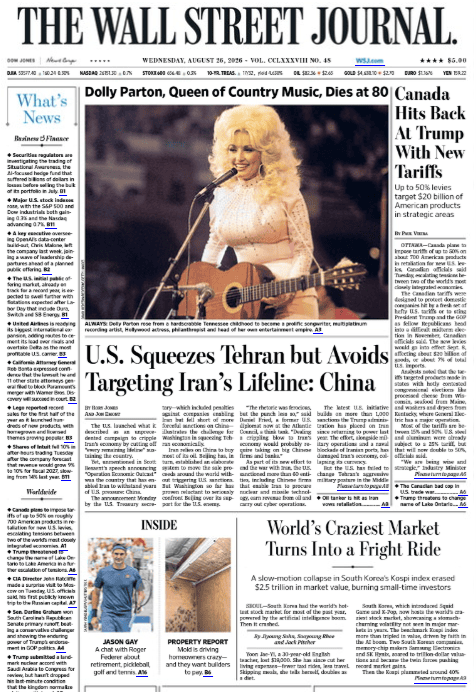
…while ignoring the fact that despite the Fright Ride of late, the KOSPI Index has gained more than 100% over the past year. Yes, some of the Johnny-Come-Lately’s have been badly burned, but a market that has doubled in 12 months has rewarded far more folks than it has punished!
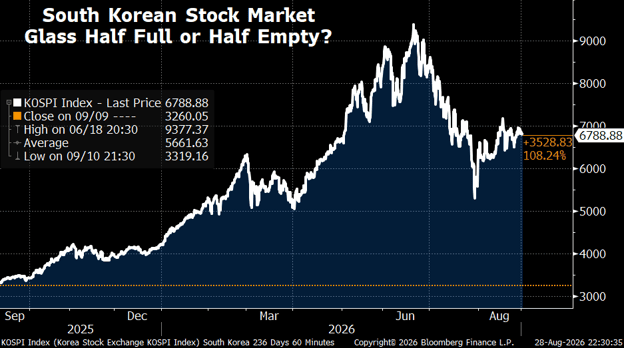
With the KOSPI heavily concentrated in semiconductor titans Samsung Electronics and SK Hynix, the Korean market has become a proxy for the AI-buildout trade, which has proven lucrative for many stocks…assuming the scorekeeping is not limited to what has transpired since June 30!
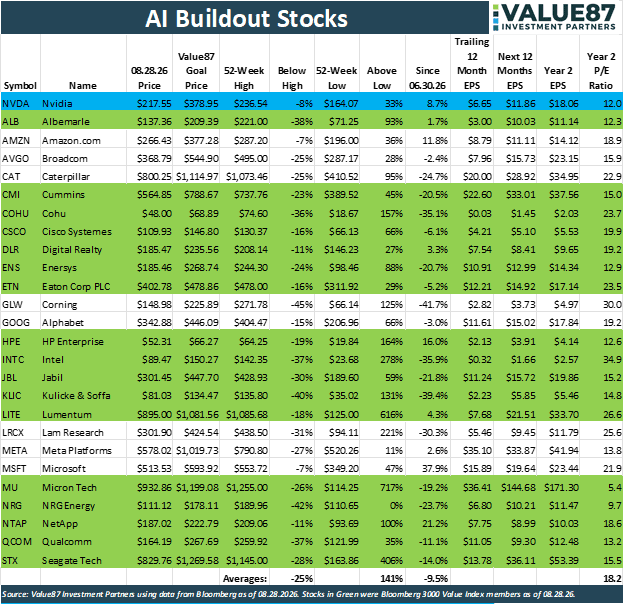
And speaking of AI, traders didn’t know what to make of NVIDIA's fiscal second quarter results, which were released after the close on Wednesday. The world leader in AI and accelerated computing offered another confirmation that the AI buildout represents one of the most durable capital expenditure cycles in a generation. While we don’t presently hold Nvidia, it is a bellwether stock for the broader AI capex cycle and its price action can impact our picks-and-shovels AI positions.
Nvidia reported a revenue surge exceeding 100% year-over-year to $96.2 billion, far ahead of the $92.4 billion estimate Wall Street had expected. Data Center revenue of $89.0 billion (representing 92 cents of every dollar NVIDIA earns) grew 117% from the prior year and came in $3.1 billion above consensus. Adjusted EPS of $2.22 beat the $2.09 consensus. Gross margin was unchanged at 75.0%, in line with expectations. The company returned a record $25.7 billion to shareholders in the quarter, broken up into $19.7 billion of buybacks and $6.1 billion of dividends. And it ended the quarter with more than $99 billion in cash on the balance sheet.
At first, traders panned the report as somehow not as good as hoped, with the stock initially falling in after-hours trading on Wednesday, before CFO Colette Kress guided to approximately 70% revenue growth in FY2028, the first time NVIDIA has offered a full-year outlook so far in advance. Although it’s grand and positive, and the stock soared more than 8% on Thursday, we feel that this is a long way out to be making a prognostication. Prior to the call, Wall Street analysts had been modeling roughly 45% growth, meaning the outlook implies more than $100 billion of additional potential upside.
Interestingly, management was explicit that the 70% figure is supply-constrained, meaning that underlying demand would support growth of approximately 100%. NVIDIA’s primary challenge is not finding customers; it is struggling to build chips fast enough to serve them. Supply commitments jumped to $279 billion from $119 billion last quarter, with $179 billion due within six quarters. Looking less-far ahead, the Q3 revenue guide of $108 billion (±2%) exceeded prior consensus of $105.1 billion by nearly $3 billion.
All this sounds pretty good to us…but shortly after the putting to bed of overnight columns on Thursday, with headlines like Nvidia Sales Forecast Sends Shares On Biggest Rally Since 2025, the stock opened lower on Friday and went on to skid 4.6%, one of the sharpest setbacks since 2025!
Such is the nature of investing in stocks that attract the momentum crowd. Sentiment can turn on a dime, seemingly independent of financial fundamentals. This incredible volatility is why we continue to like our long-playing strategy of capturing some of our profits on our big winners along the way, while allowing the balance of our position to run on for greater upside…as long as the valuation metrics support a continued hold.
And we certainly are tempted by Nvidia, which we have owned in the past, especially given the current Year 2 P/E of 12. However, while our Value87 Goal Price has been repeatedly ratcheted higher in recent months, the $5.2 trillion market capitalization gives us some pause, and it isn’t like we do not already have significant AI exposure in our portfolios.
We also are not blind to massive capital-expenditure and return-on-investment issues for those paying for the buildout, not to mention the circular financing question marks and the growing not-in-my-backyard chorus against the proliferation of data centers. And then there are the social, political and economic unknowns that may arise as AI becomes ubiquitous.
Still, when we weigh the risk and rewards, we are very comfortable with our AI-related holdings, while our current thinking is that a continued pullback in AI stocks could create an opening for Nvidia in some of our portfolios.