
Every investor remembers the winners.
In my career, which started in 1987, Al Frank (the first Editor of The Prudent Speculator) and I (John Buckingham, the Editor of The Prudent Speculator from 2002 after Al passed away until 2026), I’ve been fortunate to have knocked it out of the park on multiple occasions. Jason Clark joined me in 2007 and Chris Quigley joined in 2009. They, too, have had their share of successes.
We’ve been thrilled with our stock picks over the years, but I’d argue that we’ve learned more from the losses than the winners.
Across our decades as Value investors, our stocks…both winners and losers…have tended to share several important traits. They were purchased at reasonable prices, supported by what we thought were (or could become) quality businesses and held with enough patience to allow their underlying value to rise.
Of course, none of the characteristics below guarantees success. These are observations from our investment experience and should not be viewed as predictors of future investment results and each investor has their own ‘secret sauce’. Whatever that is for you, it should be consistent and replicable. Stocks are always climbing a Wall of Worry and pullbacks do happen with regular frequency, so it’s critical to be able to stay on the path.
1. Investors Were Too Pessimistic
Many of the best times to invest came when investors were focused on what could go wrong or what was going wrong.
A company might have reported an earnings decline or a disappointing quarter. Perhaps there’s broad economic uncertainty, a pandemic, a new war or a geopolitical spat has reared its ugly head. The market’s reaction was often understandable in the short term, but the resulting share price sometimes reflected a much darker future than was actually ahead. In the table below, we offer a wide variety of scary events along with subsequent returns.
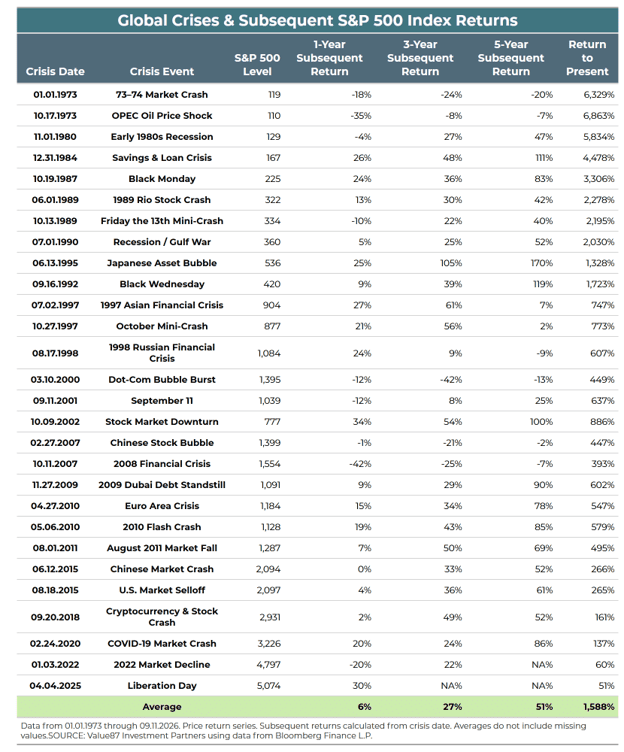
When fear rules the Street, it’s easy assume that current problems will persist indefinitely. Yet many challenges are temporary. The table above might even support an argument that all challenges are temporary.
Investors who can distinguish a temporary setback from a structural problem may find attractive opportunities when enthusiasm is absent.
2. Valuation Created a Margin of Safety
A good company is not automatically a good investment. The price matters.
As Value investors, we endeavor to buy quality companies at reasonable prices. Even though a Growth investor would be the opposite side of the coin, Value investors aren’t looking for companies that aren’t growing. Quite the opposite.
We use a quantitative framework to search for relative value among the three thousand stocks in our investable universe. Included in the math are metrics that relate to growth (such as sales and earnings), balance sheet strength, risk and shareholder returns of capital.
From there we perform a qualitative review for things that math can’t consider or are unique to a company and build a forward-looking Goal Price. We seek to buy stocks below a reasonable estimate of fair value, which provides a margin of safe and doesn’t forego upside potential from growth. We think it’s really the best of both worlds.
3. Stock Picks That Had Durable Advantages
Durable advantages can take many forms. A company may benefit from a trusted brand, a low-cost production network, proprietary technology, strong customer relationships, distribution scale, regulatory approvals or a business model that becomes more powerful as it grows.
When we go fishing for Value stocks in our universe of nearly 3,000 stocks, the companies we uncover may appear down and out. Perhaps few analysts follow the stock, or the industry is facing significant challenges. But those “warts” aren’t necessarily deterrents. In many cases, they are precisely what create the opportunity, particularly when the underlying business still possesses strengths that can support a recovery or future growth.
Unfortunately, in many cases that recovery doesn’t arrive for months or years after we open a position. In the meantime, the stock price may decline further, testing our patience and conviction.
But we believe our long-term orientation is an advantage [LINK]. Combined with the broad diversification that Al and I have extolled for nearly 50 years, it allows us to wait patiently for the stock to have its day in the sun.
4. Earnings and Cash Flow Are Important
Market narratives can be powerful, but business results ultimately matter more.
Even if they weren’t that way when we first purchased them, some of our biggest winners have been supported by improving earnings, healthy cash generation, rising returns on capital and/or other successes for the underlying business.
Time and again we have been perplexed by the market’s near-term reaction to results. A company beat analyst estimates on the top and bottom lines, offers solid guidance, but the margin was off by a fraction of a percent and it’s down 10%. Eventually, a short-term frenzy yields to a more rational long-term views, but that can take time (if it happens at all).
That disconnect can be frustrating. A company may report better results while its shares remain stagnant. But a widening gap between business value and market price can create an opportunity provided the improvement is genuine and sustainable.
Cash flow deserves particular attention. Reported earnings can be affected by accounting choices, one-time items or noncash charges. Cash generation offers another perspective on whether a company’s operations are truly producing economic value.
This does not mean investors should ignore accounting profits. Rather, earnings, cash flow, balance-sheet strength and capital allocation should be considered together.
5. Management Allocated Capital Wisely
We are rarely wooed by management teams. Indeed, we have met with management teams in the past and those turned into some of our biggest losers. That’s not to say that management teams don’t add value. Many do. But we are hesitant to believe everything a CEO or CFO say considering that part of their job description is to be a corporate cheerleader.
That in mind, we do watch the actions of management. There are teams that routinely exercise sound judgment, particularly with respect to acquisitions, reinvestment, debt, dividends or share repurchases. This frequently is part of the discussion in our qualitative review of a stock, as well as a recurring theme during our holding period.
A strong business can be weakened by poor capital allocation. Conversely, capable managers can help a good company navigate difficult conditions and strengthen its competitive position. We simply like to see the evidence of it, rather than believing what they are saying.
6. The Stock Pick’s Thesis Was Understandable
We strive to make our writing clear and understandable. It should be largely free of jargon and the sort of “punching up” that tries to make simple ideas appear more complicated than they are. It is easy to discuss sophisticated topics using sophisticated words. The harder work is to explain those topics in a way that is accessible, precise and useful.
That discipline benefits more than the reader. Writing in plain English forces us to organize our own thinking. If we cannot explain an investment thesis clearly, we may not understand it as well as we think we do.
Our published body of work, including investment theses, are therefore designed to be straightforward enough to read, remember and revisit. And we do revisit them often.
We want to emphasize that simplicity should not be mistaken for a lack of rigor. A single paragraph about a company may reflect hours of analysis, data gathering, industry research and debate. Yet the ultimate objective is to distill all that work into a concise explanation of why we believe the investment is attractive. And if there are challenges, warts or things simply aren’t working out, we relay those honest thoughts, too.
In our experience, clarity is not merely a skill. It is a foundational discipline.
7. Patience Was a Competitive Advantage
Some investments worked quickly. Others required years.
Patience was often essential because markets do not always recognize value on a convenient schedule. A company may need time to complete a restructuring, recover from a cyclical downturn, reduce debt or demonstrate that a new strategy is working.
Short-term price movements can test even well-researched investments. A stock can decline after purchase despite strong fundamentals. It can also rise sharply before the business has fully realized its potential.
Patience does not mean refusing to sell. It means avoiding unnecessary decisions based solely on noise.
The investment should be reconsidered when the thesis changes, the valuation becomes excessive, management loses credibility, or a better opportunity emerges. But selling simply because the market has not yet agreed with the analysis can turn a potentially successful investment into a permanent mistake.
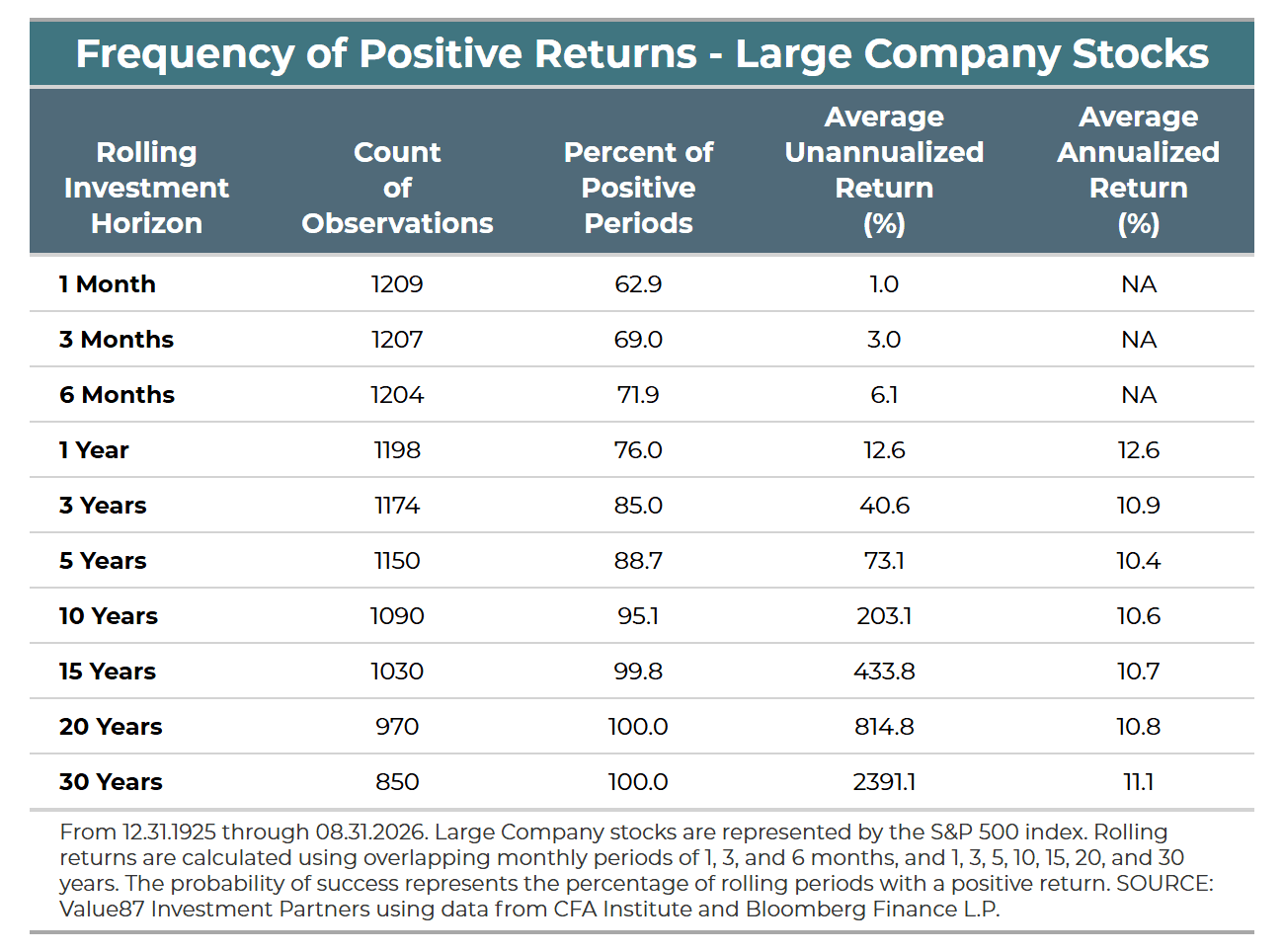
An Investment Process Is More Important Than Any Stock Pick
No investment record is built without mistakes. Ours is no different. Some businesses disappoint, some valuations prove too optimistic and some promising opportunities never work out.
The enduring lesson is that successful investing depends less on predicting every market move than on following a repeatable process.
The Common Thread: Price, Quality, and Patience
Looking back, our best investments were rarely defined by a single magical insight. They combined several advantages and spread them out across many dozens of stocks (we like 70 to 90 in most of our portfolios, but each investor has their own ideal count).
Value investing is ultimately an exercise in independent judgment. It asks investors to study businesses rather than headlines, think in probabilities rather than certainties, and focus on long-term economic value rather than daily price movements.
The best investments reminded us that patience is not passive. It is an active decision to let sound analysis, reasonable valuation, and business progress work together over time.
Stock Pick Advice
The most successful long-term investments may have shared a durable business model, a sensible purchase price, capable management and/or financial resilience. And those principles can reduce risk (but won’t eliminate it). We also think there’s value in broad diversification. Yet perhaps the single most important lesson isn’t related to a specific pick at all. It’s to be patient and evaluate stock picks with a long-term lens.
Important Information
This article is provided for educational and informational purposes only and reflects the author’s views, observations and investment experience. The investment characteristics and principles discussed are not guarantees or predictors of investment success, and there can be no assurance that their application will result in profitable investment outcomes.
Investing involves risk, including the possible loss of principal. Past performance and historical market results are not indicative of future results. Market conditions, investment opportunities and results may differ materially from those experienced or discussed.
Historical market data and other information presented in this article may be obtained from third-party sources. We do not control third-party sources and do not independently verify or guarantee the accuracy, completeness or timeliness of their data or content. Historical market information is provided for context and should not be interpreted as a forecast, projection or indication of future market or investment results.
Index returns are presented for informational and comparative purposes only. Indexes are unmanaged and are not available for direct investment. Index performance does not reflect the deduction of investment management fees, transaction costs or other expenses that would reduce the returns of an actual investment. An index may not be representative of any particular investment, portfolio or investment strategy, and its performance should not be viewed as indicative of the performance of any investment or portfolio.
Valuation and investment analysis involve judgments, estimates and assumptions that may prove incorrect. References to valuation, margin of safety, Goal Price, business quality, competitive advantages or other investment characteristics reflect our investment approach and do not assure that an investment will achieve its objective, appreciate in value or avoid losses.